Maharashtra Board Class 8 Measurement and Effects of Heat , Textbook Exercises This page includes Fill in the Blanks, Questions and Answers, as well as Additional Questions and Answers for the chapter.
Whom should I pair with? Solution
Group ‘A’ Group ‘B’
- Temperature of a healthy human body b. 98.6 °F
- Boiling point of water d. 212 °F
- Room temperature a. 296 K
- Freezing point of water c. 0°C
Who is telling the truth?
- The temperature of a substance is measured in joule. False.
- Heat flows from an object at higher temperature to an object at lower temperature. True.
- The joule is the unit of heat. True.
- Objects contract on heating. False.
- Atoms of a solid are free. False.
- The average kinetic energy of atoms in a hot object is less than the average kinetic energy of atoms in a cold object. False.
You will find if you search.
a.A thermometer is used to measure ……………. [temperature]
b.The apparatus used to measure heat is called a ………… [calorimeter]
c.Temperature is the measure of the …………. kinetic energy of the atoms in a substance. [average]
d.The heat contained in a substance is the measure of the ………….kinetic energy of the atoms in the substance.[total]
What must be the temperature in Fahrenheit so that it will be twice its value in Celsius?
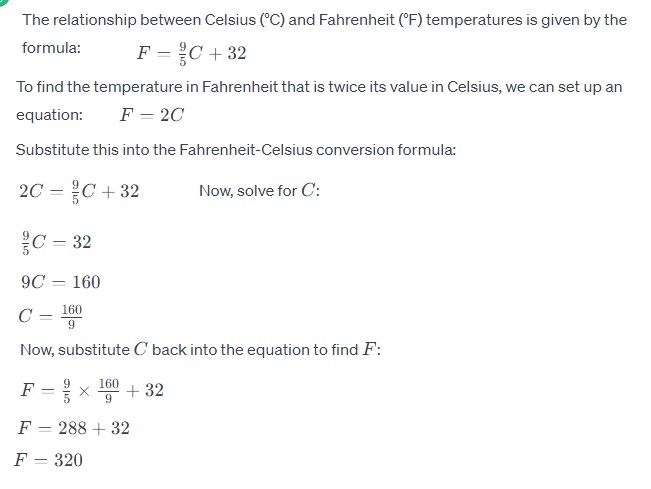
Class 8 Measurement and Effects of Heat Additional QA
What is the unit of heat in the SI system?
Answer: c) Joule
What is geothermal energy?
Answer: b) Heat generated in the Earth’s center
Which element undergoes fission to produce a huge amount of heat in atomic energy projects?
Answer: b) Uranium
How is temperature different from heat?
Answer: a) Temperature is the total kinetic energy of atoms, while heat is the average kinetic energy.
What is the purpose of a clinical thermometer?
Answer: b) To measure body temperature
What is the unit of specific heat in the SI system?
Answer: c) Joule/(kg°C)
What does a calorimeter measure?
Answer: b) Heat content
Why is the inner vessel of a calorimeter made of copper?
Answer: a) It is a good conductor of heat.
Important Notes
I. Introduction
- Heat as a form of energy flow from high to low temperature objects.
- Temperature indicates the hotness or coldness of an object.
- Ice cream has a lower temperature than tea.
II. Various Effects of Heat
- Heat causes expansion and contraction in objects.
- Changes in the state of matter due to heat.
- SI unit of heat: Joule, CGS unit: calorie (1 cal = 4.18 J).
III. Sources of Heat
- Sun: Nuclear fusion generates heat.
- Earth: Geothermal energy from the high-temperature core.
- Chemical energy: Burning fuels (wood, coal, petrol) produces heat.
- Electrical Energy: Electricity powers devices generating heat.
- Atomic energy: Fission of elements like uranium produces heat.
- Air: Contains a significant amount of heat.
IV. Heat and Temperature
- The difference between heat and temperature.
- Temperature relates to the average kinetic energy of atoms.
- Heat is the total kinetic energy in a substance.
- Kinetic energies equalize when temperatures are equal.
V. Thermometer
- Clinical thermometer measures body temperature.
- Working principle: Expansion of liquid (alcohol) with temperature.
- Digital thermometers measure body heat directly.
VI. Calorimeter
- Measures heat content in an object.
- Inner and outer vessels prevent heat transfer.
- Hot or cold objects reach thermal equilibrium with water in the calorimeter.